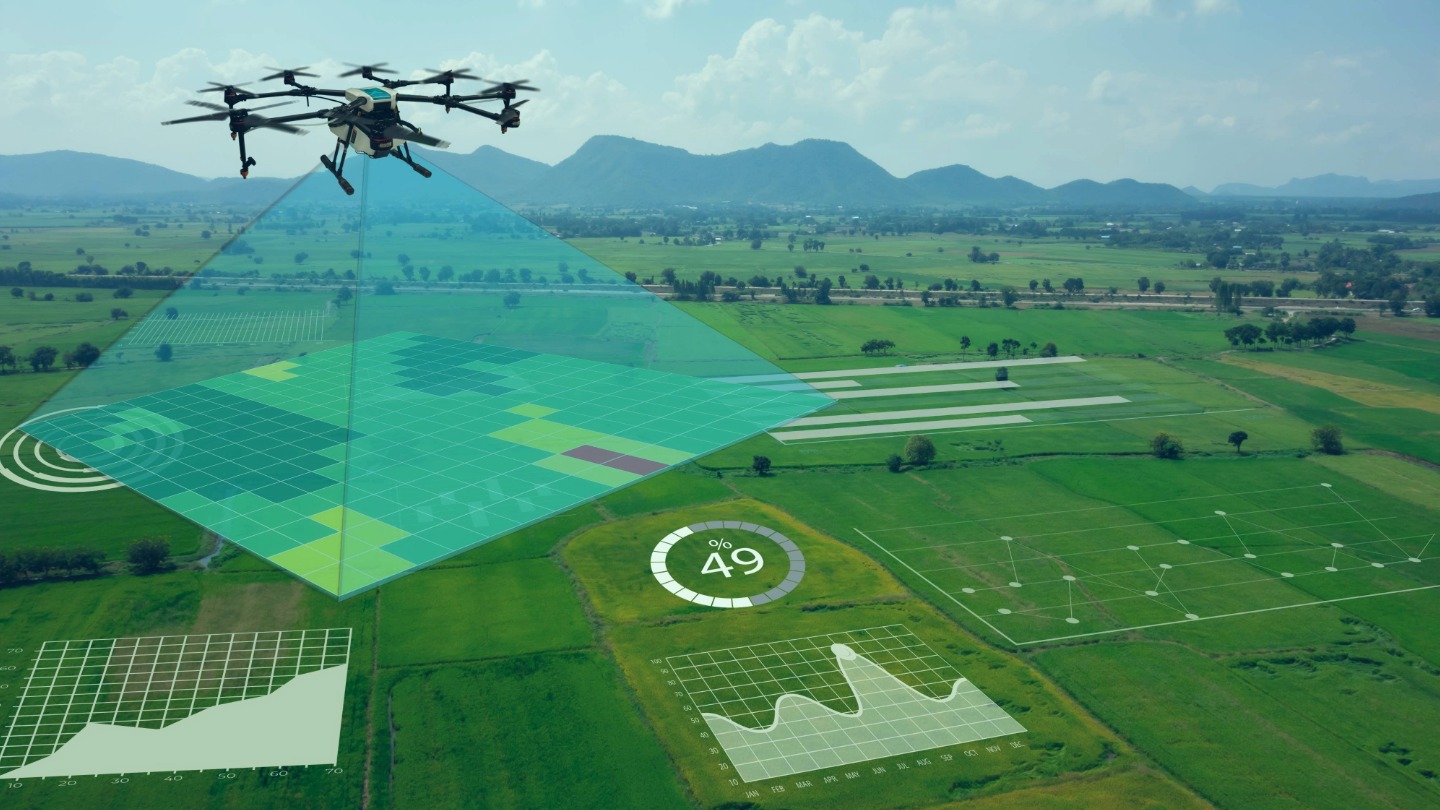
The project focuses particularly on Data‑as‑a‑Service (DaaS) applications and new service concepts built around drones and airships. Data collected by drones can be used to support precision farming, for example in fertilisation planning, identifying crop protection needs, and optimizing field operations.
“There are examples especially from China and the United States, where drones are widely used for site‑specific fertilisation, crop‑protection spraying and even seeding. In Finland, however, the full potential of drones in agriculture has not yet been realised. One key reason is regulatory constraints, which still significantly limit what drones can be used for. Operating drones also require manpower: whether conducting a crop survey or a spreading task, you typically need at least one person fully dedicated to the job. Automation could improve this dramatically by reducing workload and lowering costs, making drone use more economically viable. In the future, we are likely to see more specialized drone service providers from whom farmers can purchase tasks such as crop surveys or fertilisation as outsourced services,” explains Aleksi Kärnä, project manager and specialist at Jamk University of Applied Sciences.
In addition to service concepts, the project identifies and develops practices for producing and utilising agricultural data and explores the potential use of drone in a box-solutions and airships within the agricultural value chain. The project also aims to support a more holistic understanding of the agricultural data ecosystem and to accelerate the transition towards data‑driven, automated agricultural production.
The MADE project is co‑funded by the EU and runs from 1 January 2026 to 31 March 2028. Jamk acts as the main coordinator, with partners including the Finnish Geospatial Research Institute (FGI), Luke and HAMK. Industry partners Kelluu Oy, Rumble Tools Oy, Knobbi Oy and LähiTapiola Palvelut Oy also contribute to the project.