From the Silenced Voice to the Inclusive Room
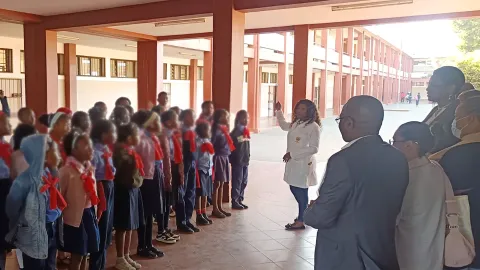
Cacilda Rafael Nhasisse works at UP-Maputo and is one of the Key Experts in TIPOTE, focusing on digital pedagogy. Looking back on her TIPOTE journey in October 2025, she shared a powerful message about the importance of listening to young voices and the opportunities digital tools create for diverse learners. Discover her inspiring words – a poem that speaks volumes.
For years, I was a voiceless presence.
The classroom was a place for listening... but not for my voice.
I learned, yes. But I couldn't say what I thought.
My difference was invisible.
My story, irrelevant.
My voice... silenced.
And that silence transformed me.
It transformed the way I saw school.
It transformed the way I saw myself
It was during a training session that I saw myself.
I saw that inclusion goes beyond what I imagined.
Inclusion isn't just a ramp.
Inclusion isn't just a caption.
Inclusion is listening.
Inclusion is presence.
Inclusion is respect.
I discovered inclusive pedagogies.
And I realized that teaching isn't about repeating.
It's about recognizing. It's about adapting. It's about transforming.
Technology appeared as a bridge.
A bridge between me and my students.
A bridge between who we are and who we can be.
Inclusive digital pedagogy isn't a luxury.
It's fairness.

Today I'm a teacher.
And in my classroom, every voice counts.
I use Microsoft Teams to create conversation spaces.
In OneNote, each student has a space that's just theirs—where they write what they feel.
In Forms, we ask questions, listen, and exchange ideas.
And with Sway, they create visual stories that previously had no place.
Inclusive digital pedagogy isn't a luxury.
It's fairness.
It's ensuring that everyone learns, each in their own way.
The classroom is no longer a place of silence.
It's a place of listening.
Of expression,
of inclusion.
And I... am no longer the silenced student.
I am the teacher who opens doors.
Every digital tool I use is a key.
A key that opens possibilities.
A key that says: You too have a voice. You too have a place.
And you, teacher…
What voices are you still not listening to?
What practices still unintentionally exclude?
Inclusion is listening, not just teaching.
It's seeing the invisible, embracing silence,
It's making space,
so that other voices
can exist.
Read the speech in Portuguese | Ler o discurso em português
Da Voz Silenciada à Sala que Inclui
Durante anos, fui presença sem voz.
A sala de aula era um lugar de escuta… mas não da minha voz.
Eu aprendia, sim. Mas não podia dizer o que pensava.
A minha diferença era invisível.
A minha história, irrelevante.
A minha voz… silenciada.
E esse silêncio tranformou-me.
Transformou o modo como via a escola.
Transformou o modo como me via a mim mesma.
Foi numa formação que me vi.
Vi que a inclusão vai além do que eu imaginava.
Inclusão não é apenas rampa.
Inclusão não é apenas legenda.
Inclusão é escuta.
Inclusão é presença.
Inclusão é respeito.
Descobri as pedagogias inclusivas.
E percebi que ensinar não é repetir.
É reconhecer. É adaptar. É transformar.
A tecnologia apareceu como ponte.
Uma ponte entre mim e os meus alunos.
Uma ponte entre o que somos e o que podemos ser.
Hoje sou professora.
E na minha sala, cada voz conta.
Uso o Microsoft Teams para criar espaços de conversa.
No OneNote, cada aluno tem um espaço que é só seu — onde escreve o que sente.
No Forms, perguntamos, escutamos e trocamos ideias.
E com o Sway, criam histórias visuais que antes não tinham lugar.
A pedagogia digital inclusiva não é luxo.
É justiça.
É garantir que todos aprendem, cada um à sua maneira.
A sala já não é um lugar de silêncio.
É um lugar de escuta.
De expressão.
De inclusão.
E eu… já não sou a aluna silenciada.
Sou a professora que abre portas.
Cada ferramenta digital que uso é uma chave.
Uma chave que abre possibilidades.
Uma chave que diz: ‘Tu também tens voz. Tu também tens lugar.
E tu, professor(a)…
Que vozes ainda não escutas?
Que práticas ainda excluem sem querer?
Incluir é escutar,
não apenas ensinar.
É ver o invisível,
acolher o silêncio,
É abrir espaço,
para que outras vozes
possam existir.