Agriculture is currently seeking solutions that can simultaneously improve production efficiency and reduce environmental impact. Climate change mitigation, digitalisation and resource efficiency all require tools that withstand everyday conditions and fit seamlessly into farmers’ workflows.
Field testing plays a crucial role, revealing what works in practice and what still needs improvement.
As the Nordic coordinator, Jamk’s role was to match the selected startups with suitable test farms and to support both the planning and practical implementation of the pilots. This created a direct channel for collaboration: startups gained access to realistic testing environments, while farms were able to explore new solutions with a low threshold.
news 16.1.2026
EIT Food Test Farms brings agritech innovations to farms – Jamk coordinated the Nordic testing season in 2025
In the EIT Food Test Farms programme, agritech startups have the opportunity to test and validate their solutions on real farms, in authentic use situations, and to gather feedback from farmers and experts. The aim is to bridge the gap between new technology and practical farming, and to accelerate the adoption of innovations that bring genuine value to everyday farm operations.
Jamk coordinated the 2025 implementation, in which 12 startups tested their solutions on 10 pilot farms in Finland, Norway and Sweden. For startups, field piloting offers valuable hands‑on experience of how solutions perform in demanding northern farm conditions.
Twelve European agritech startups offering both hardware and software solutions were selected. Their innovations related to crop production and livestock, as well as themes such as sustainability, precision farming, digital traceability and CO₂ monitoring. Together, they reflect the direction in which the sector is heading: data utilisation, automation and resource efficiency are becoming everyday decision‑making tools. The participating startups were: 3E Energy, AgriSenze, Anicare, EnviroTech, EOD, Filtson, NPHarvest, Paul‑Tech, PerPlant, Soil Scout, spogen.ai and Xylo Gas.
The crop and livestock farms involved formed a broad and diverse testing environment for the startups. In addition to traditional crops, the group included producers of specialty crops such as strawberries, and innovations aimed at livestock were particularly relevant for dairy farms. Alongside privately owned farms, research and teaching farms also provided testing environments.
Weather conditions, network connectivity, peak workloads and rapidly changing situations create an environment that cannot be fully simulated. When a solution works under these circumstances — or when its weaknesses become visible — the feedback is extremely valuable for further development.
Through the tests, companies gained concrete ideas on how to simplify usability and what factors influence reliability and adoption.
The collaboration produced practical benefits for both farms and startups: farms were able to assess in their own conditions how well new solutions fit into existing workflows, and where technology genuinely saves time, improves decision‑making, or strengthens confidence in production monitoring.
Examples of the pilots
Animal welfare: Anicare
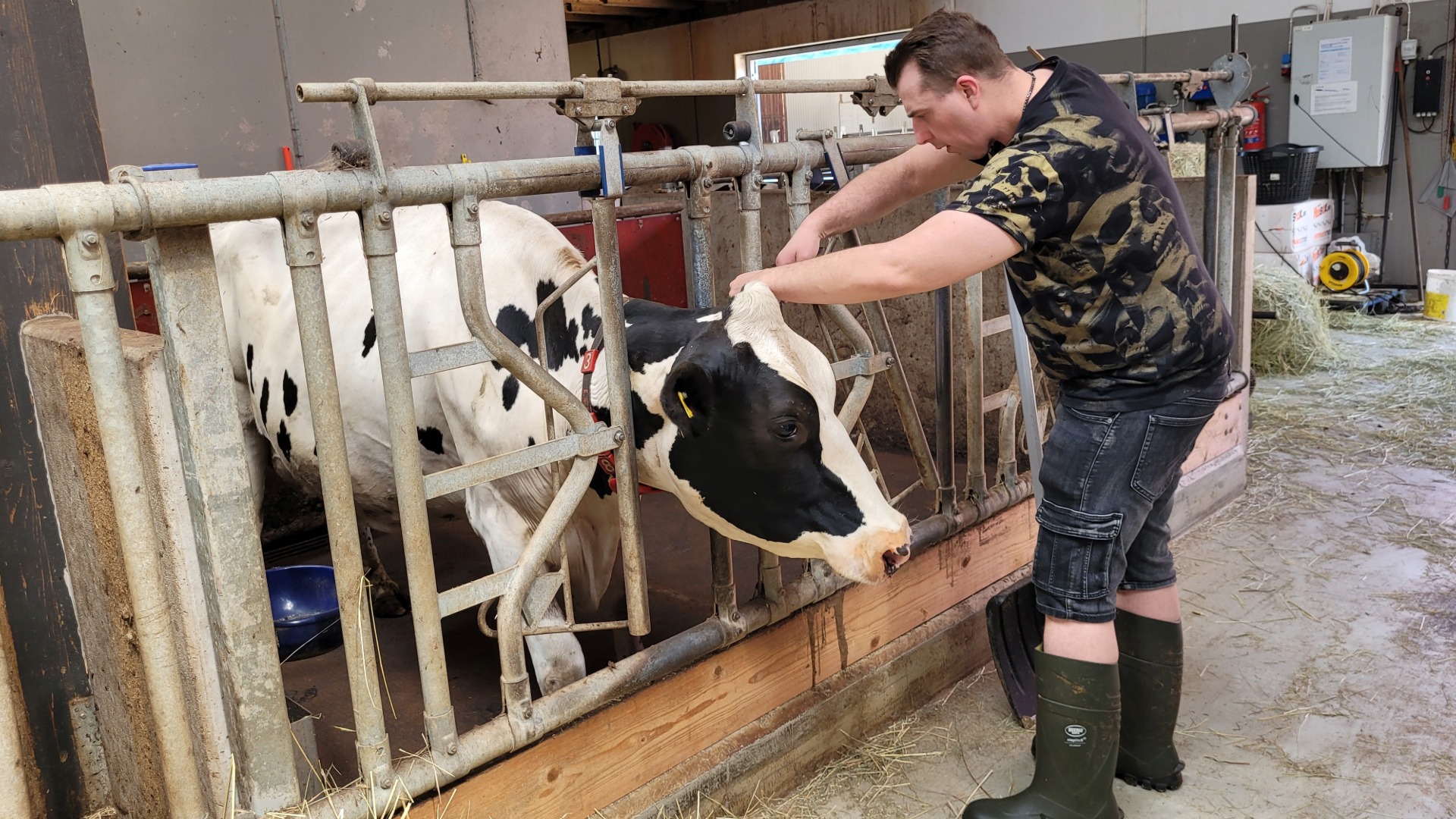
The Finnish company Anicare tested its activity sensors on a Swedish dairy farm. The lightweight ear sensor collects data on animal movement and behaviour, and such data can help detect deviations and support herd health management. The test confirmed the solution’s suitability for practical conditions while highlighting areas for improvement, such as the importance of stable connectivity. Insights like these are at the core of field piloting: they show what still needs refinement to ensure reliable everyday use.
AI in the field: spogen.ai Smart Assistant
The Smart Assistant by the Finnish company spogen.ai was tested at the Bioeconomy Campus fields in Saarijärvi. The idea of the assistant is to support machine operation by providing real‑time guidance directly during the task, helping reduce downtime and streamline work. The pilot revealed important insights into the needs of different users and what usability and reliability require in the varied conditions of rural environments.
“The EIT Food Test Farms programme provided us with an excellent opportunity to test the Smart Assistant in an authentic agricultural environment. Field piloting gave us valuable practical insights into the different types of support required by users ranging from experienced professionals to students. We gained confirmation of the solution’s functionality, as well as important feedback and perspectives for further development. The collaboration and support throughout the programme were first‑class, and at the AgriVenture Finland event the Smart Assistant attracted exactly the kind of industry interest we hoped for. Overall, the experience was extremely positive and helped bring the technology a step closer to practical applications,” says Joonas Koivuniemi, co‑founder and CEO of Spogen.ai.
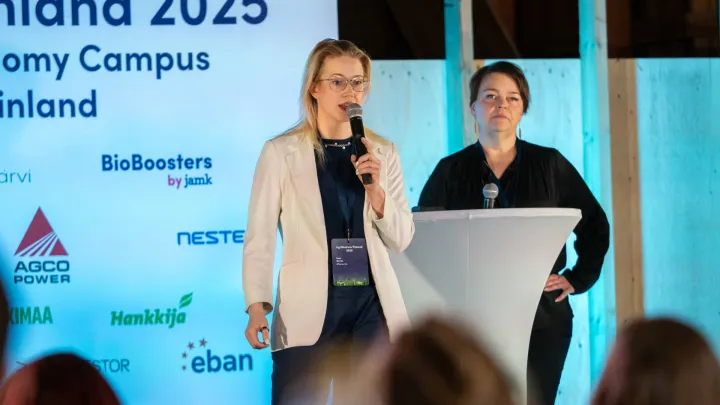
During the testing season, several solutions were also showcased at industry events, where pilots and findings were brought into wider discussion. At the AgriVenture 2025 event held at the Bioeconomy Campus, startups had the opportunity to present their solutions, and many also participated in the pitching competition, where the main prize was awarded to NPHarvest.
The impact of the testing season extends far beyond a single summer. The initiative also created value at the network level. When several innovations were tested on the same farm, collaboration among startups emerged naturally: experiences were exchanged, observed challenges were solved together, and the compatibility of different solutions was explored in practice.
Jamk’s coordinating role further strengthened its agritech networks and provided an up‑to‑date view of which solutions are moving towards wider adoption — and under what practical conditions that adoption becomes possible.
Maria Hoikkanen
Tutkimusavustaja, Research co-worker
Biotalousinstituutti, Institute of Bioeconomy
Teknologia, School of Technology
+358504430633
firstname.lastname@jamk.fi

News
12 European Agritech Startups Selected for EIT Food Test Farms Programme
The programme connects agritech startups with Nordic farms, creating an invaluable opportunity for both parties. Jyväskylä University of Applied Sciences coordinates the EIT Food Test Farms programme in the Nordic region for 2025.
News
AgriVenture Finland 2025 Pitching Competition Winner NPHarvest Turns Wastewater into Fertiliser
The Influencers of the Future pitching competition showcased 16 startups with their high-quality innovations in the agricultural sector. The competition winner, Finnish NPHarvest, turns wastewater into fertiliser with their new technology.
Keywords
bioeconomy
Institute of Bioeconomy
RDI results
分享


